
Skip to content
  • MICRO-MODULES
  • Quick Learning
  • TRAIN THE TRAINER
  • RESOURCES
  • FAQ
  • Contact
Log in

differences Between Natural and Laboratory-Grown Diamonds

As billion-year-old miracles of nature, natural diamonds have long symbolized love, strength, and authenticity. In recent years, laboratory-grown diamonds have entered the marketplace as man-made alternatives created in controlled environments. Discover the key differences between natural and laboratory-grown diamonds, including their origin, formation, rarity, and value.

REGISTER NOW
← BACK TO MODULES

IN THIS MODULE, YOU’LL DISCOVER KEY FACTS ABOUT NATURAL DIAMONDS

Natural and laboratory-grown diamonds differ in origin, rarity, and value.

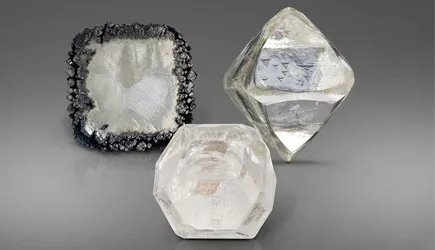
Natural diamonds formed over billions of years beneath the Earth.

Laboratory-grown diamonds are created in factories within weeks.
01

What are Natural Diamonds, Laboratory-Grown Diamonds, and Diamond Simulants?

5 minutes

A natural diamond’s hardness, heat conductivity, and optical properties make them valuable for many industries. However, their rarity makes them too valuable to use for many of these applications. This fact has caused people to try and artificially replicate the unique properties of natural diamonds for decades.

02

What are the Differences Between Natural and Laboratory-Grown Diamonds?

5 minutes

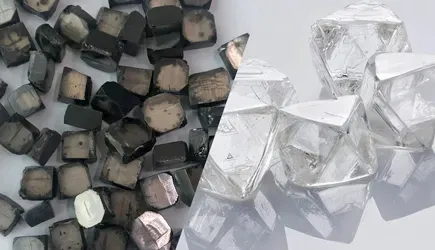
When comparing natural diamonds and laboratory-grown diamonds, key differences emerge in their origin, formation time, and value, reflecting the unique processes of nature versus human innovation.
03

Identifying Laboratory-Grown Diamonds from Natural Diamonds

5 minutes

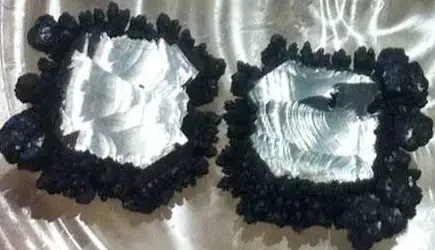
When comparing natural diamonds and laboratory-grown diamonds, it is important to understand that while they share many physical and chemical characteristics, they are not identical. Professional diamond verification instruments can accurately detect laboratory-grown diamonds, helping protect consumer confidence and ensure transparency across the diamond industry.
04

How are Laboratory-Grown Diamonds Made?

5 minutes

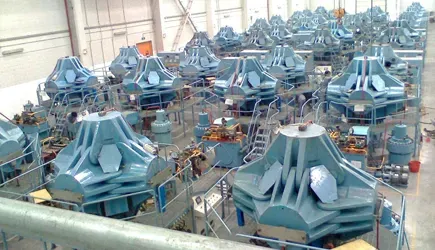
There are two main processes used to create laboratory-grown diamonds. The production method used does not affect the look or cost of the finished product.

05

What to Know About Environmental Claims

5 minutes

Laboratory-grown diamond manufacturers often make eco-claims about their products and at times, they are in violation of the U.S. federal guidelines in doing so. It is important that the consumer is not misled and it is your responsibility to accurately represent the product.

06

Frequently Asked Questions

5 minutes

EARN YOUR CERTIFICATE

COMPLETE THIS MODULE TO RECEIVE
YOUR CERTIFICATE OF ACHIEVEMENT.

Celebrate your knowledge and share what you’ve learned.
VIEW CERTIFICATE →
← PREVIOUS MODULE
NEXT MODULE →

© 2026 Natural Diamond Council Terms of Service ❘ Exercise My Rights ❘ Contact Us

3 Key Takeaways:
  • Although both laboratory-grown and natural diamonds are made of crystallized carbon, laboratory-grown diamonds are created in factories in a few weeks, while natural diamonds were created billions of years ago deep within the Earth.
  • The growth structures of laboratory-grown and natural diamonds are fundamentally different, making them easily distinguishable through testing.
  • Laboratory-grown diamonds continue to decline in price due to mass production, while natural diamonds remain rare, contributing to their higher value and increase in price over time.


3 Key Takeaways:
  • Diamond simulants are look-alike stones that mimic a diamond’s appearance, but lack its crystallized carbon structure, durability, brilliance, rarity, and value. Simulants offer a less expensive way to replicate the beauty of a natural diamond.
  • Common simulants like cubic zirconia, moissanite, and white sapphire vary in hardness and optical properties, making them visibly and physically different from natural diamonds.
  • Despite some visual similarities, experts can easily distinguish simulants from real diamonds due to their distinct composition and performance under light.


3 Key Takeaways:
  • The diamond market is highly diversified, with major producers across four continents: Canada, Africa, Siberia, and Australia.
  • The industry includes publicly traded corporations and state-owned enterprises, providing transparency and competition. No single company holds a majority market share.
  • There is no possibility of stockpiling diamonds or artificially controlling prices, as the modern diamond industry operates as a competitive, open market driven by supply, demand, and global consumer interest.


3 Key Takeaways:
  • Human fascination with diamonds predates modern advertising, with references to their power and beauty found in ancient mythology, such as Cupid’s arrows tipped with diamonds.
  • The tradition of diamond engagement rings began in 1477 when Archduke Maximilian of Austria gave the first recorded diamond ring to his fiancée, long before the famous “A Diamond Is Forever” slogan.
  • Diamonds have been cherished for their rarity, beauty, and symbolism for thousands of years, with their significance deeply rooted in history, long before any modern marketing campaign.


3 Key Takeaways:
  • You can safely clean your diamond jewelry at home using warm water, mild dish soap, and a soft-bristled toothbrush, avoiding harsh chemicals that may damage metals.
  • For a deeper clean, ultrasonic and steam cleaners can effectively remove dirt from hard-to-reach areas, but should be used carefully following the manufacturer’s instructions.
  • Regular maintenance including safe storage, avoiding exposure to grime and chemicals, and periodic professional checkups helps keep your diamonds sparkling and secure.


3 Key Takeaways:
  • A diamond doesn’t have to be “perfect” on paper to be truly stunning. While grading reports from reputable laboratories provable valuable information about the 4Cs, always view the diamond in person to truly evaluate its brilliance and remember that a higher grade on paper doesn’t necessarily mean a more beautiful diamond.
  • Shop at a trusted fine jewelry retailer to ensure a smooth and confident diamond-buying experience. Reputable retailers often have a long-standing history of providing high-quality products, excellent service, educational resources, and fair value—a reputation earned over time.
  • If a diamond is priced significantly lower than others of similar size and quality, there’s often a reason. Pay close attention to critical details that can dramatically impact a diamond’s value and appearance.


4 Key Takeaways:

  • Cut determines a diamond’s brilliance by affecting how it reflects light, making it the most important factor in sparkle.
  • Carat refers to a diamond’s weight, with larger diamonds being rarer and more valuable.
  • Clarity is graded based on the amount of visible natural inclusions, with flawless diamonds being extremely rare.
  • Color is a measure of how colorless the diamond is. Most natural diamonds appear colorless or near colorless to the average shopper but actually have slight tints of yellow or brown. The closer the stone is to a colorless diamond, the rarer and generally more valuable it is. The color scale ranges from D (colorless) to Z (heavily tinted brown or yellow).

3 Key Takeaways:

  • Modern diamond recovery is a large-scale, technologically advanced operation run by mostly publicly traded companies, offering safe, well-paying jobs in remote regions. It is statistically safer than working in retail.
  • The diamond industry directly benefits the livelihoods of 10 million people worldwide by providing stable employment and driving economic growth.
  • The industry supports smaller-scale artisanal miners by improving health and safety standards and ensuring fair market opportunities, playing a crucial role in uplifting communities globally.

3 Key Takeaways:

  • Diamond mines are required to have a detailed closure and rehabilitation plan in place before operations begin, ensuring the land can be restored once mining ends.
  • Companies contribute to a government-controlled escrow fund throughout the mine’s life to guarantee that proper closure and restoration are fully financed.
  • When a mine closes, local companies are often hired for the rehabilitation process, materials are recycled, and the land is restored so effectively that the former mine may become nearly indistinguishable from its natural state.

3 Key Takeaways:

  • The carbon footprint of a 1-carat natural diamond, from mine to finger, is roughly the same as producing a MacBook computer or driving for 5 hours.
  • For every acre of land used in large-scale diamond mining, three acres are conserved, protecting over 1,000 square miles of ecosystems and endangered species.
  • The natural diamond industry is making significant environmental strides, including using renewable energy, developing carbon capture technology with kimberlite rock, recycling 84% of the water used in mining, and ensuring that 99% of the waste produced is non-toxic rock.

3 Key Takeaways:

  • The natural diamond industry supports 10 million people globally, generating $16 billion annually, with 80% of the wealth staying in local communities like Botswana and Canada, boosting infrastructure, education, and healthcare.
  • While the natural diamond industry has made strides in reducing its carbon footprint, laboratory-grown diamonds require energy-intensive processes, often relying on coal-powered energy in countries like China and India.
  • The natural diamond industry is a powerful force for good, focusing on environmental conservation and community support.

3 Key Takeaways:

  • The Kimberley Process, a United Nations-mandated initiative, has nearly eliminated conflict diamonds from the market by ensuring diamonds are ethically sourced from conflict- free regions.
  • The natural diamond industry goes beyond the Kimberley Process by implementing additional ethical and environmental standards, including fair wages, human rights protections, and responsible mining practices.
  • Today, more than 99.9% of natural diamonds are conflict-free, and buying a natural diamond from a reputable retailer ensures you are supporting ethical sourcing and sustainability.

3 Key Takeaways:

  • Unlike flowers, which grow the same way regardless of their environment, laboratory-grown and natural diamonds form under completely different conditions, over vastly different time periods, and have fundamentally different characteristics.
  • A natural diamond is over 3 billion years old and incredibly rare, while a laboratory-grown diamond is created in weeks and can be produced in unlimited quantities.
  • Natural diamonds have been prized for thousands of years due to their age, scarcity, and enduring value, while laboratory-grown diamonds are always distinguishable from natural diamonds, making simple analogies insufficient to capture their true differences.

3 Key Takeaways:

  • Government regulations require full disclosure, meaning if a diamond is laboratory-grown, it must always be labeled as such. The term “diamond” alone always refers to a natural diamond.
  • Grading certificates from reputable gemological labs must specify whether a diamond is natural or laboratory-grown.
  • When shopping online, it’s essential to carefully read the fine print to ensure you’re purchasing the diamond you truly want.

3 Key Takeaways:

  • Laboratory-grown diamonds may appear eco-friendly, but their production requires extreme heat and pressure, resulting in large amounts of electricity often from non-renewable sources.
  • The carbon footprint of a 1-carat natural diamond is similar to producing an iPhone, taking a short flight, or driving for five hours.
  • Diamond miners protect 4x the amount of land that they use in their operations.

3 Key Takeaways:

  • Natural diamonds derive their value from their rarity, with exceptional diamonds of high clarity and color being incredibly rare and highly sought after.
  • Laboratory-grown diamonds can be produced in unlimited quantities, meaning their price is based on manufacturing costs rather than scarcity, making them less valuable in comparison.
  • Natural diamonds have historically appreciated in value at about 3% per annum, while laboratory-grown diamonds continue to decline in price as production technology advances.

3 Key Takeaways:
  • Natural diamonds, like any true treasure from nature, derive their value from their rarity. The rarer they are to find, the more valuable they become.
  • Laboratory-grown diamonds can be created in virtually any size, color, or clarity, and in unlimited quantities. Their price is determined by production costs and the profit margins of the manufacturers, not by rarity.
  • Natural diamonds are a finite resource, and their value has historically appreciated at about 3% per annum over decades. Meanwhile, laboratory-grown diamonds continue to decline in value as production gets cheaper and competition increases.


3 Key Takeaways:

  • Synthetic diamonds were first developed in the 1950’s to meet industrial demand for the exceptional hardness and thermal properties of natural diamonds, which are too rare and expensive for widespread industrial use.
  • Laboratory-grown diamonds are created using two main methods: High-Pressure High-Temperature (HPHT), which simulates Earth’s natural conditions, and Chemical Vapor Deposition (CVD), which forms diamonds in a reactor.
  • These manufacturing processes typically take place in factories in countries like India and China, where production is more cost-effective due to lower energy and labor costs.

3 Key Takeaways:

  • Although both laboratory-grown and natural diamonds are made of crystallized carbon, laboratory-grown diamonds are created in factories in a few weeks, while natural diamonds were created billions of years ago deep within the Earth.
  • The growth structures of laboratory-grown and natural diamonds are fundamentally different, making them easily distinguishable through testing.
  • Laboratory-grown diamonds continue to decline in price due to mass production, while natural diamonds remain rare, contributing to their higher value and increase in price over time.

3 Key Takeaways:

  • Natural and laboratory-grown diamonds are completely different products.
  • Natural diamonds were formed billions of years ago, deep within the earth and are the oldest thing you will ever touch. Laboratory-grown diamonds are manufactured in a couple of days to weeks using machinery that replicates the Earth’s natural conditions, making them 100% distinguishable from natural diamonds.
  • Natural diamonds are a finite resource and among the Earth’s top 10 rarest materials. Laboratory-grown diamonds can be produced in unlimited quantities and their value has decreased by over 80% since 2016.

3 Key Takeaways:

  • Millennials account for about 60% of the demand for diamond jewelry and engagement rings in the U.S., with this trend continuing to grow.
  • Younger consumers prioritize authenticity, rarity, and long-term value, making natural diamonds especially appealing.
  • Unlike mass-produced alternatives, a billion-year-old natural diamond represents timelessness, deep meaning, and a lasting symbol of love and commitment, driving younger generations to lead the market.

3 Key Takeaways:

  • Decades of price data show that natural diamonds have appreciated by an average of 3% per annum, proving their long-term value.
  • Trade-up programs offered by jewelers further demonstrate that natural diamonds maintain their worth over time.
  • Unlike laboratory-grown diamonds, which decline in price due to unlimited production, natural diamonds are a finite resource, making natural diamonds a true heirloom.

3 Key Takeaways:

  • There’s no fixed rule for how much to spend on a diamond engagement ring; the most important factor is choosing a diamond that is meaningful and fits comfortably within your budget.
  • Natural diamonds are available at a wide range of price points, allowing you to find a piece of jewelry that reflects your love story without financial stress.
  • The “right” amount to spend on a diamond engagement ring is personal. What truly matters is selecting a natural diamond that symbolizes your commitment and can be cherished for generations to come.

3 Key Takeaways:

  • On average, a 1-carat natural diamond costs about $5,300, while a 1-carat laboratory-grown diamond costs about $1,000.
  • The price of a natural diamond is tied to how rare it is to find in nature. Each of the 4Cs play a role in determining its value due to how unique a individual diamond truly is.
  • Laboratory-grown diamonds do not follow the same rules. Their colors and sizes can be manufactured in unlimited quantities, so their prices don’t reflect rarity.

3 Key Takeaways:

  • Natural diamonds are formed deep within the Earth over billions of years, making each diamond rare and unique.
  • Natural diamonds have been cherished for over 3,000 years as symbols of love, strength, and legacy, holding emotional and financial value.
  • The natural diamond industry supports millions globally, providing jobs, education, and infrastructure in countries like Botswana and Canada.


3 Key Takeaways:

  • Natural diamonds formed over 3.7 billion years ago under intense heat and pressure, then traveled upward through volcanic eruptions to reach the Earth’s surface.
  • Major sources of natural diamonds today include Botswana, Canada, and Siberia, where they are extracted before being cut and polished into jewelry.
  • The immense time and geological forces behind every natural diamond make them some of the rarest treasures on Earth, adding to their value and significance.

3 Key Takeaways:

  • Known as Fancy Color Diamonds, they can form in nearly any color of the rainbow and are valued for their exceptional rarity, especially in shades like blue and red. These particular shades can fetch over $1M per carat.
  • Fancy Color Diamonds are graded using terms that describe their color, tone, and intensity.
  • Fancy Color Diamonds form from unique geological processes, while treated or laboratory-grown colored diamonds lack the rarity and value of natural Fancy Color Diamonds.

3 Key Takeaways:

  • Natural diamonds are likely the oldest object you will ever touch or own, dating back 1 to 3 billion years, long before life existed on Earth.
  • As the hardest natural material, natural diamonds are unmatched in durability, making them enduring symbols of strength, resilience, and rarity.
  • Early civilizations recognized the uncuttable nature of diamonds, which contributed to their lasting allure as ancient, unbreakable treasures that have fascinated humanity for millennia.

3 Key Takeaways:
  • Natural diamonds are among the rarest naturally occurring substances on Earth and 70% of the diamonds recovered are used for industrial purposes, with only 30% being gem quality for jewelry.
  • If you were to combine all the one carat and above diamonds discovered in a single year, they would only fill one exercise ball.
  • Every single natural diamond is one of a kind.


Congratulations! You have successfully updated your account access.

Sign In
Don't have an account? Register here.